

we are born to survive and selected to predict. in a dynamic world of flora and fauna, the one who can tell what happens next and can act on it commands better odds. maxing out predictive power on the neural substrate, rather than physical power or dexterity, just scales better; 🧒 > 🐯.
continual prediction, active inference, or in other words, the simulation of reality around us in response to our actions, is embedded in us at such depth and breadth, the psyche is evolved to support it in the first place. active inference is the unifying constraint shaping most psychic functions. we’re misled by the evidence of conscious predictive functions into thinking it only goes so deep. its prevalence scales from the simplest of reflexes to the anticipation of complex social responses, most happening unconsciously.
prediction is performed at multiple bio, socio levels and in timescales:
synaptic plasticity (Saponati, M. et al. (2023), Feldman, D. (2012), Shouval, H. Z. (2010)),
brain regions (de-Wit, L. et al. (2010), hippocampus as a simulation engine),
catching a ball: (Welniarz, Q. et al. (2021)),
anticipating a friend’s disgust before they even wrinkle their face when they lean over a spoiled container of milk (Gallese, V. et al. (2004)),
buying BTC in 2011.
in fact, when we look at ML, the models we have that’s closest to be called intelligent are massive predictive models. autoregressive or diffusion-based, self-supervised simulation machines for human writing. not really encompassing the whole cognitive, internal process of the act of writing, they are only trained to generate the final product token-by-token. regardless, the evidence points to, when artificial intelligence is concerned, that it can best be created through simulation or imitation of a complex enough human endeavor. writing is a persistent medium for world (or human experience) simulation/modeling in the first place.
world models translate best to active inference models, that internally simulate the world and how actions influence it. LeCun and Sutton don’t seem to have the right abstractions to produce intelligence at scale. one builds synthetic encoders, the other slow, overly free, weakly predefined dopamine circuits. better versions of both of those emerge from models trained on forward prediction, simulation of complex enough processes. we can learn great representations, compressions without a custom designed, arbitrary training objective, and implement policies without using a bunch of RL indirection. you can just predict things.
Jungian archetypes and social prediction
our psyche is built for the simulation of the world, to mirror, reflect the outside world with some resource constraints that evolution had to comply with. recently, most of the psyche has been concerned to simulate the behavior of other people, as none other is as complex and important enough for our survival. archetypes evolved for such social simulation as predictive, compression modules.
evolutionary, biological constraints forced us to encode others as constellations of archetypes and emulate their behavior through such constructs, clustering them, instead of building a separate model for everyone around us. here’s a claim: all neurosis can be traced back to misaligned or unknown archetypal constellations.
mispredicted social contingencies → loss of coherence in world-model → chronic prediction error → anxiety/depression/defense formation.
if your prediction is off, that will hurt, that will push you into depression or psychotic breakdown, because your life depends on it —at least it predominantly used to. if your parents orphaned you, the tribe ousted you, you were pretty much done with. to this day, kids who get pushed aside by peers and are left out of games and social interactions, grow up to be depressed and largely socially dysfunctional, because they can’t predict how their actions influence others. the cost of misprediction is made felt and the system is pushed to fix the bias at all levels of the body and mind.
the world, especially the social sphere, is immensely complex. a long dialectical process between the individual and the collective was necessary to build clusters of human behavior to compress the wide repertoire of psychological traits, social mechanisms into buckets, while also ever expanding our modes of behavior to ensure survival. i call it dialectic, as we created these buckets, told dramas about them, then sat into those buckets ourselves, which spiraled into a humanly encodable, predictable social environment. these buckets are the archetypes. over time, the number of archetypes and their symbolic depth deepened through instances of valuable out-of-distribution actions fueling the refinement of mythic stories. stories stuck that resonated with the state of the collective unconscious and slowly uncovered from and injected more symbols into the psychic world.
projecting dramas onto lifeless objects, like the stars, seasons etc. shows how dominant the social modeling framework became in the psyche. looking at it from the rational angle, we are overusing it, over mythologizing, forcing meaning into emptiness. from the feeling angle though, a world rich in mysteries and emotional coloring is more exciting, meaningful to live in. and drama modeling largely works - it had time to develop and fit patterns over a millennia, albeit through an animalistic lens.
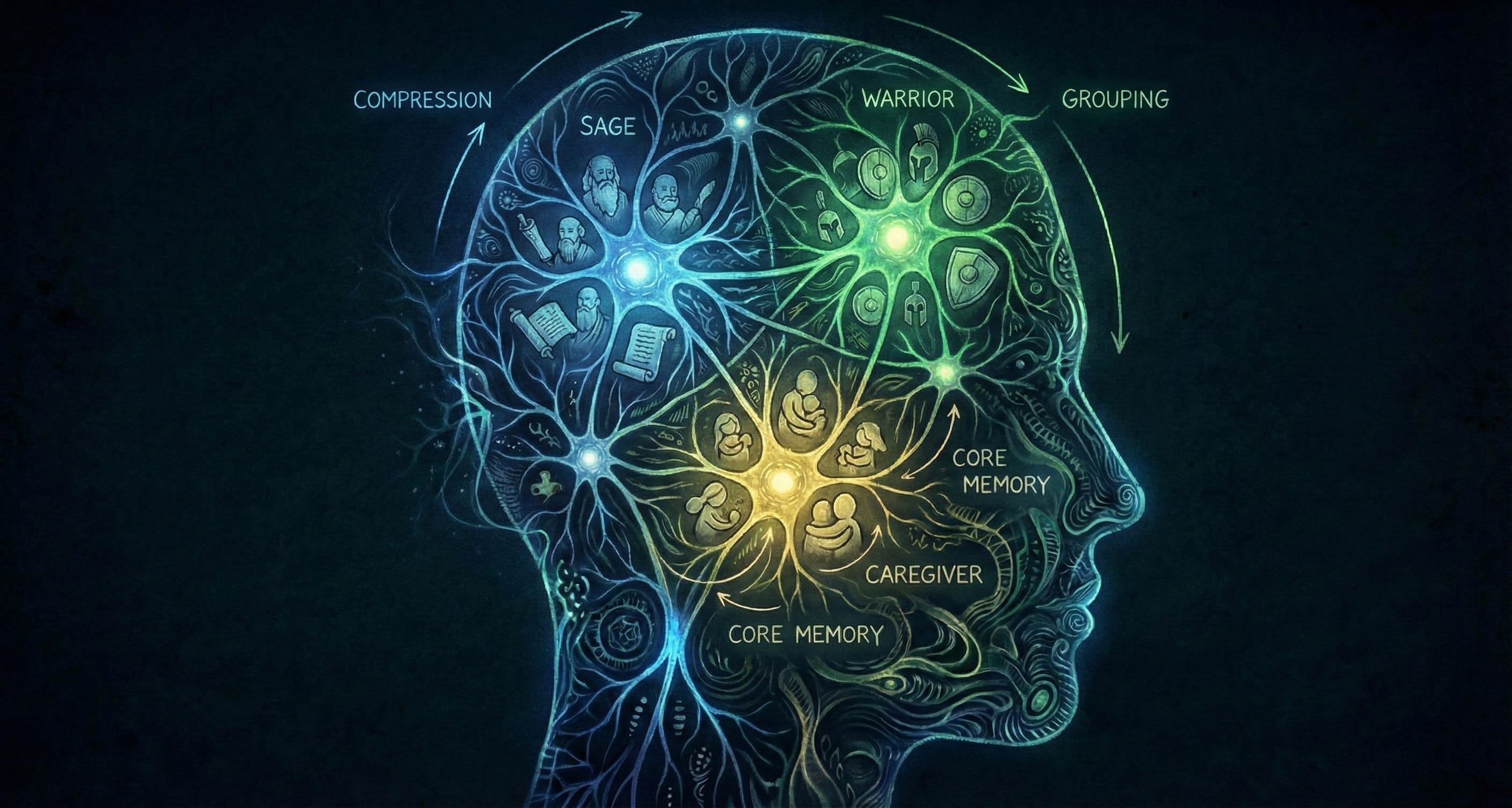
psychically, archetypes function both as a clustering, i.e. identification mechanism and as modes of behavior to be expressed. i think it’s again the result of the limits posed on our mental processing powers that simulation of others through archetypal introjections/projections has the same underlying neural mechanism as acting out the archetypes. very similar neural activity is seen when 1) one performs a physical action, when 2) we merely imagine performing the action, and when 3) we see someone else do the same action (the mirror neuron effect). given a hard manual task ahead, our warrior side may step up to dominate, whatever our integrated version of the warrior is. we see an old man in the park, looking in the distance with peace, then the wise old man, the sage archetype takes over in us. he gets simulated = we become more like him for a moment. seeing an instance of an archetype “out there” really means that its integrated version comes alive in us.
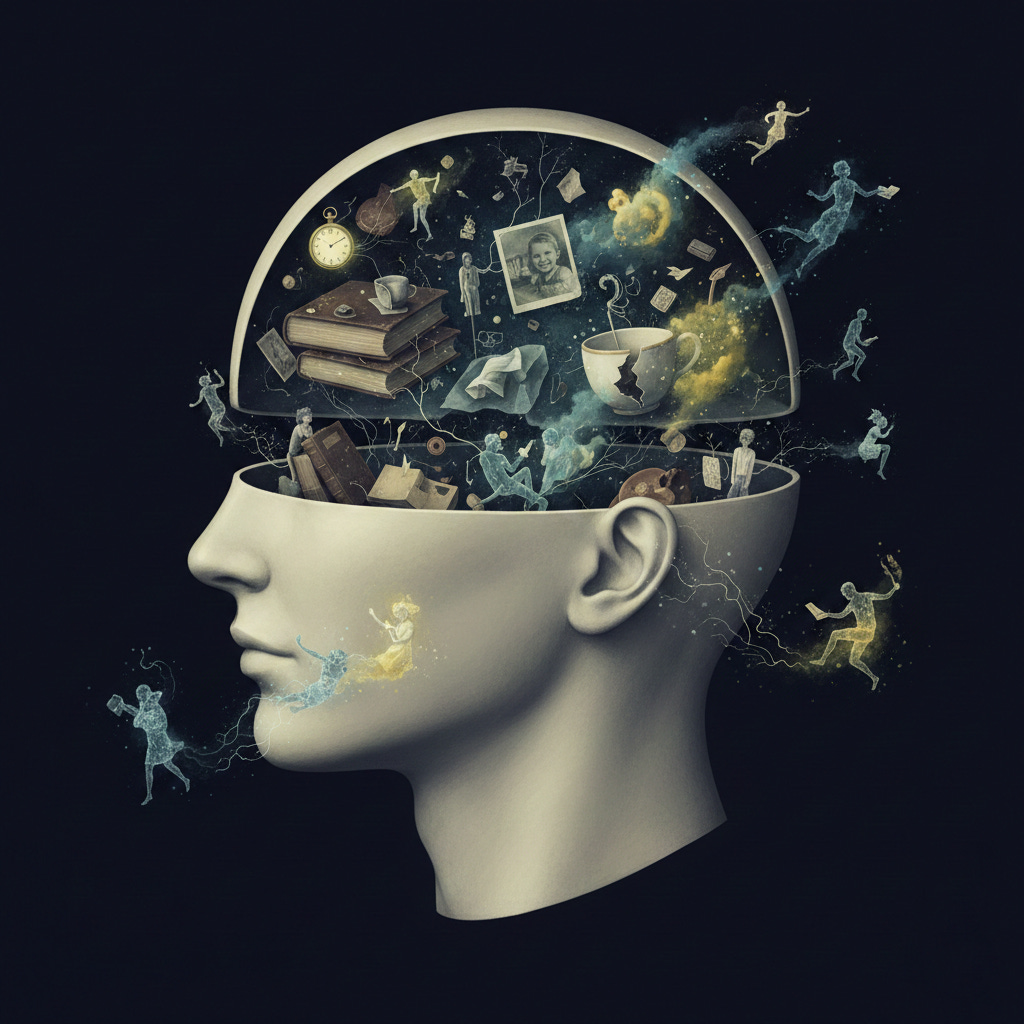
a fundamental rule: any attitude toward an object—hate, fear, desire—occurs entirely within the individual. the attitude itself is generated in the mind, and even the ‘object’ is only the mind’s internal representation of something external. {bazdmeg a funyirod medve cried nyuszika}. for instance, often women who exercise hate towards narcissistic men, having experience being used by such men, the daemon of the narcissist becomes alive in them, and they feel the disgust towards the simulacra narcissist inside. they don’t want to believe that they have potential for narcissism, and thus they repress it and project it outwards. the repressed narcissism masks itself in moral superiority, strong judgement and contempt towards “lower” modes of behavior. they become overtly sensitive to ego threat just the same. everything psychic, even that we experience as external, happens within. the repressed narcissist is within too, and if not understood with compassion, it will influence our actions when we are not looking.
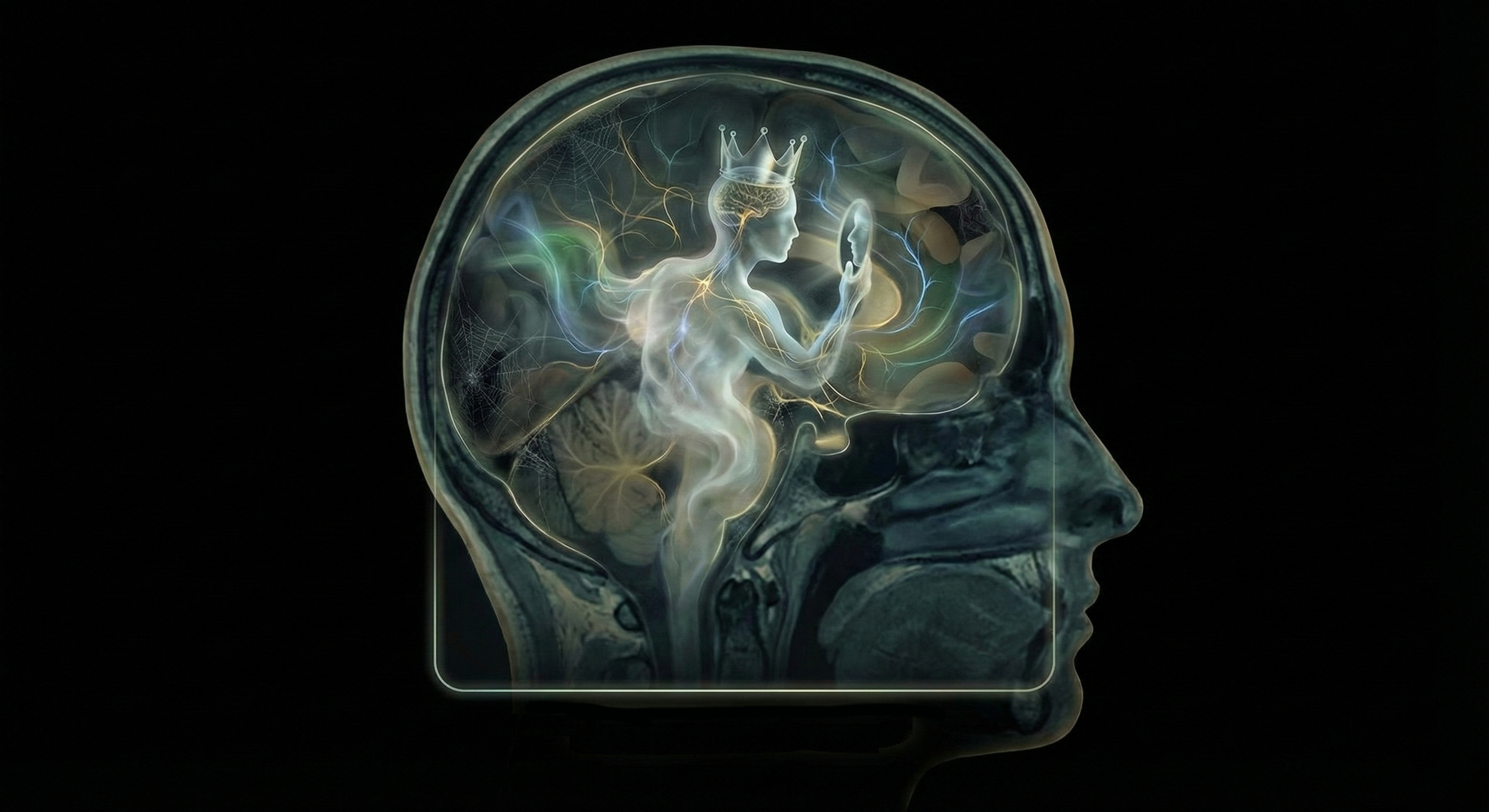
every character in a dream is an archetype present and temporally active = simulated in the subject. when we’re hunted or killed in a nightmare by someone we know irl, it’s the archetypal constellation associated well with them attacking the conscious self. Jung thought this was about the archetype wanting to draw attention to itself. it almost never has anything to do with the actual real life person that the archetype presents itself as. we may have an underlying meta learning mechanism [figure out how to call this], which surfaces archetypes in dreams that we repressed (behavioral patterns that could benefit us if expressed) or have biased, missing understanding about. the psyche senses when our predictions are misaligned, and features relevant archetypes in dream simulations to recalibrate them.
the simulation never stops. when sensory inputs cease, the simulation is rolled out without any anchoring to reality. that’s where the internal archetypal representations depicted the clearest. no sensory override, no conscious censorship. teacher forcing during the waking moments, free running simulation whilst asleep.
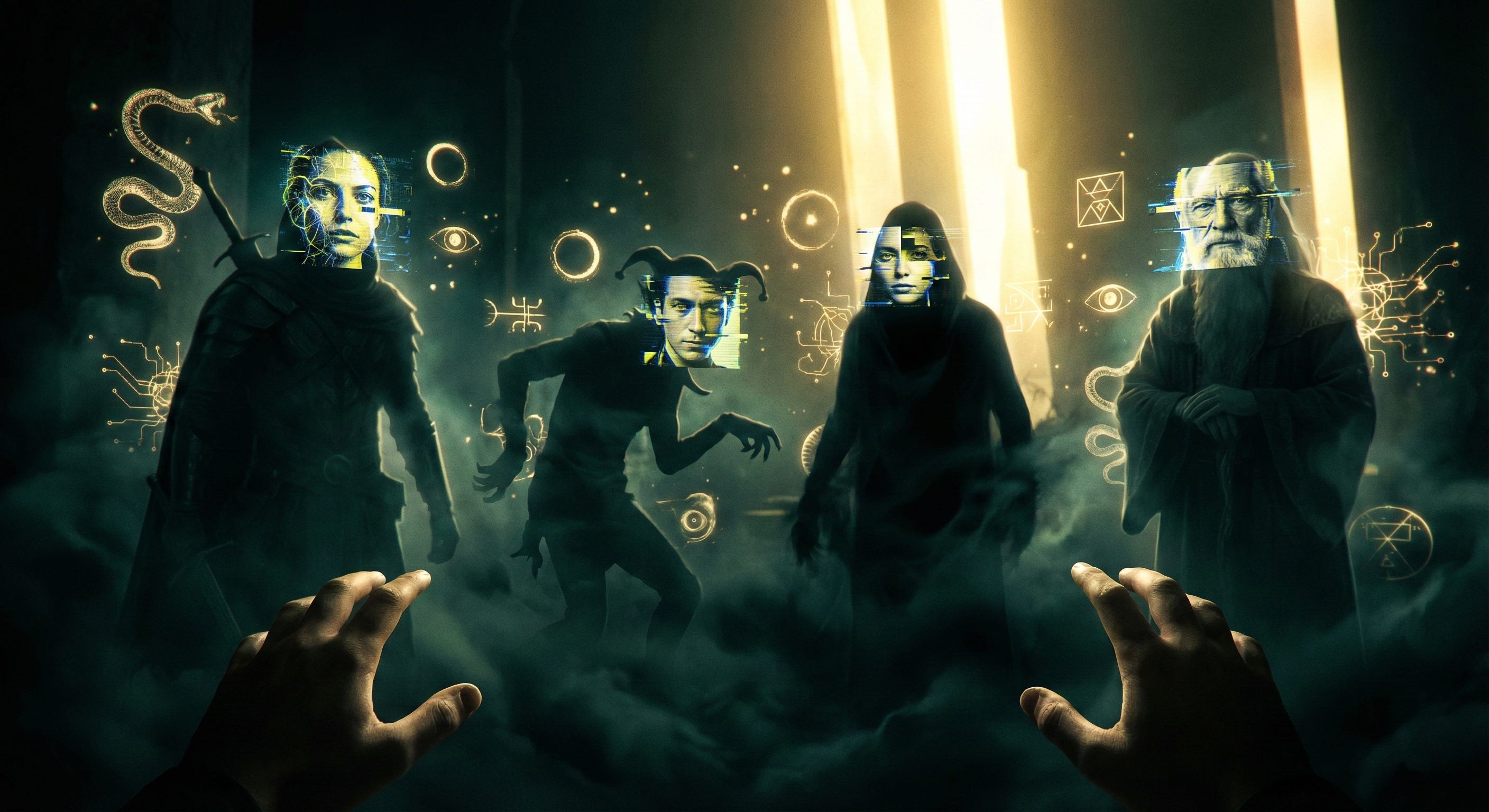
a mythical, meaning-charged explanation in the past made daemons, gods, spirits responsible for men’s dreams, fantasies and (unusual) acts. we thought of it as daemons taking over the subject, which in a way is a much more accurate and useful model than the “enlightened” DSM crap of neuroses classification. yet it still projects the archetype outside of the subject, while “The line dividing good and evil cuts through the heart of every human being.”, Solzhenitsyn.
coloring archetypes
let’s get back to the main point: we predict (=simulate), to predict we compress out of necessity, and archetypes mostly compress recurring human patterns. Jung described archetypes as organs of the psyche—living structures in the collective unconscious delimited only by their form; their apparent content is individually differentiated and not inherent to the archetypes themselves. through experience, we individually fill up our own version of an archetype: the father archetype through our father and other fatherly figures, the sage archetype through our teachers, profs, mentors. the coloring of these forms occurs most readily in early childhood, and tends to slow as we age, with occasional shifts triggered by life crises and liminal experiences.
Jung said “Where your fear is, there lies your task”. hate and awe both point to an unintegrated archetype. fear and disgust, sticky attachment to and worshiping of a person in your life—any strong emotion felt towards someone other than love or compassion—is really, nothing but an unintegrated archetype. it’s a lack of understanding of the patterns of human behavior that person manifests. this may seem like a trivialization of e.g. the hate John Wick felt towards the puppy killers. but then, the hate itself is inconsequential and is only romanticized into revenge porn. zen style, one may exercise justice without hate, with a deep understanding of the other.
we are purely a reflection of the outside world, simulating it in all (biologically) relevant aspects. we are merely differentiated by our genetics and experiences. someone with naturally sensitive skin will integrate the sensual archetypes better and become an Instagram influencer traveling the world, tasting food, getting penetrated. growing up alongside entrepreneurial parents builds strong hero and king archetypes. merely the content of our archetypes is what makes us psychically unique. tao and zen emphasizing one’s emptiness means that at the final analysis, you are nothing else but a reflection.
emotional experiences color saturate archetypes: the earlier in our life and the stronger the emotion, the stronger the saturation. an early childhood canon event may define our attitude toward a large group of people—e.g., ‘men can’t be trusted’ (unavailable, inconsistent father), ‘all women are whores’ (Stifler’s mom), etc.; a strong saturation lends gravitational force to an archetype, clustering individuals more tightly around it. an individual’s behavior may be predicted better by simulating multiple archetypes associated with it. if one saturated archetype dominates in the subject, but in actuality lacks the expressiveness to simulate the other individual accurately, that creates a discrepancy between the psychic and the real world, which should hurt the subject and force an archetype adjustment.
expressing archetypes
above i described the passive, unconscious ways of archetype saturation. the active way is simply imitation. when we reenact the actions of another, we understand more of the why behind the behavior and feel the benefits or the pain firsthand. JP’s room-cleaning exercise is really just warrior-archetype integration through imitation: cleaning is simple, it has a beginning and a definite end, and progress is easy to see; with pure will there’s success at the end. success feels good, or even better, it feels meaningful. acting out the warrior archetype this way gives a taste of how meaningful it could make one’s life when expressed.
imitation doesn’t have to be physical. virtual imitation, simulated in the mind, synthesizes understanding, albeit at a lower resolution. consciousness emerged from the unconscious to support this activity, so we can have the will to express = imitate an archetype—a mode of behavior of our choosing. the more archetypes we can bring forward, the more accurately our meaning-chasing active-inference machine functions.
unintegrated, repressed archetypes are projected outward—onto people around us, onto gods, the head of state, whatever. as mentioned, we feel an unreasonable amount of hate or awe in their presence—meaning the presence of their associated archetypes in the mind.
integrated archetypes expand our experiences, arm us with actions to life’s challenges, and bring us closer to others through understanding and then compassion. to integrate an archetype is to reclaim a piece of the world we once projected onto others.
love always comes—felt and made felt—from within; we just need proof from without to know it exists.